Looking for ways to save money on groceries without spending hours clipping coupons or planning complicated meals? I don’t know about you, but I can walk into the grocery store for five things and somehow spend $75! Between family dinners, school lunches, and snacks, our grocery bills add up FAST.
As a Wichita mom, I’m always looking for practical grocery shopping tips that actually save money. I’ve learned that stretching our grocery budget isn’t just about finding the best sales. It’s also about shopping smarter, wasting less food, and making the most of what we already have.
I’m sharing my 5 favorite ways to save money at the grocery store, my Cook Once, Eat Twice trick for turning one package of meat into two dinners, and 30 cheap and easy family meals to help take the stress out of dinner. No extreme couponing required!
My Top 5 Ways to Save Money at the Grocery Store
These are the five habits I’d start with if you want to make a noticeable difference in your grocery bill.
1. Shop Your Refrigerator, Freezer, and Pantry Before Buying More
Before I make my grocery list, I check what we already have. It’s amazing how many meals you can put together without starting from scratch!
Found half a bag of frozen broccoli, some rice, and shredded cheese? You’re halfway to a casserole. Have potatoes and leftover sausage? That’s dinner!
My favorite trick is to keep a small “Eat Me First” section in the refrigerator for food that needs to be used soon.
You can also take a quick picture of your refrigerator before heading to the store. That way, you’re not standing in an aisle wondering whether you already have sour cream.
Try this: Plan one dinner each week using mostly ingredients you already own. If it saves you $15 on your grocery trip, that’s $780 over a year.
2. Plan Meals Around Meat Sales, Not the Other Way Around
Meat can be one of the most expensive parts of dinner, so I like to check what’s on sale before deciding what we’re eating.
If ground beef is a great price, I’ll plan two meals with it. If chicken is on sale, I’ll cook extra for another night.
Look for markdown stickers on packages approaching their sell-by dates. Some stores reduce meat early in the morning, but the exact day and time vary by location.
Here’s a tip worth trying: Ask the meat department, “When do you usually put out your discounted meat?” You might learn the best time to shop at your favorite store.
When you find a good deal, buy what fits your budget, divide it into meal-sized portions, and freeze what you won’t use soon.
Try this: Instead of paying $5.49 per pound, finding three pounds of meat at $3.49 per pound would save $6 on that purchase.
3. Compare Unit Prices and Look Beyond Eye-Level Shelves
This is one of those grocery tricks that sounds small but can make a real difference.
More expensive brands are often placed at eye level. I always recommend checking the top and bottom shelves for less expensive options.
But don’t just compare the price on the front of the package. Compare the price per ounce, pound, or item.
For example:
- A 12-ounce bag of cheese for $3.60 costs 30 cents per ounce.
- A 16-ounce bag for $4 costs 25 cents per ounce.
If you’ll use all the cheese, the larger bag saves 80 cents compared with buying 16 ounces at the smaller bag’s rate.
And don’t automatically trust endcap displays! Just because something is featured at the end of an aisle doesn’t mean it’s the best price.
My tip: Use your phone’s calculator if the shelf doesn’t show a unit price. Divide the price by the number of ounces or items.
4. Stop Paying Extra for Convenience Foods You Can Easily Make
I’m all for convenience, especially on busy days. But some of the easiest grocery savings come from doing a little prep at home.
Here are a few things worth comparing:
- Whole fruit instead of precut fruit: Cut your own melon or pineapple and store it in containers.
- Large snack bags instead of individual packs: Portion pretzels, crackers, or popcorn into reusable containers.
- Block cheese instead of preshredded cheese: Compare unit prices before deciding which is cheaper.
- Plain oatmeal instead of individual flavored packets: Add cinnamon, fruit, or a little brown sugar yourself.
- Larger yogurt containers instead of single cups: Portion out what your family will eat.
Here’s an example: If buying whole fruit instead of precut saves $3 a week, that’s $156 a year.
I don’t do every one of these things every week. Sometimes convenience is worth paying for! I just try to choose the swaps that save enough money to be worth my time.
5. Shop Sales With a Plan — and Actually Use What You Buy!
One of my favorite tips: If you buy it, use it!
A bargain isn’t a bargain if it ends up in the trash.
I like checking weekly ads, but I don’t drive across Wichita to save 50 cents. If another store has several items I need at great prices and it’s already on my route, that’s different.
A few tricks that help:
- Check the weekly ad before making your grocery list.
- Buy store brands when they’re less expensive and your family likes them.
- Choose seasonal produce when the price is right.
- Freeze bread, meat, and leftovers before they spoil.
- Keep a short list of your family’s regular prices so you recognize a genuinely good sale.
- Avoid buying extra food just because you have a coupon.
And yes, shopping without hungry kids asking for everything can make sticking to your list a little easier! I know that’s not always possible.
My favorite rule: Don’t buy five of something just because it’s on sale. Buy what your family will realistically use.
Cook Once, Eat Twice: Turn One Package of Meat Into Two Family Dinners
This might be my favorite grocery-saving trick of all!
If I’m already cooking ground beef, chicken, pork, or sausage, why not make enough for another dinner?
The key is turning it into something different so your family doesn’t feel like they’re eating the same leftovers over and over.
I like to cook extra meat with simple seasonings, then add different sauces or ingredients for each meal.
Ground Beef: Two Dinners From One Package
- Cheeseburgers ? Sloppy Joes
- Meatloaf ? Meatloaf sandwiches
- Taco meat ? Loaded baked potatoes
- Spaghetti meat sauce ? Stuffed peppers
- Ground beef and rice ? Stuffed cabbage casserole
- Homemade meatballs ? Meatball subs
- Seasoned ground beef ? Cheeseburger casserole
- Ground beef with onions ? Beef and vegetable soup
Chicken: Cook Extra Tonight, Save Time Tomorrow
- BBQ chicken sandwiches ? BBQ chicken mac and cheese
- Grilled chicken ? Chicken Caesar wraps
- Shredded chicken ? Chicken pot pie
- Baked chicken ? Chicken noodle soup
- Buffalo chicken ? Buffalo chicken baked potatoes
- Chicken fajitas ? Chicken burrito bowls
- Roasted chicken ? Chicken salad sandwiches
- Chicken breasts ? Chicken and broccoli rice casserole
Pork: Stretch a Roast Into More Than One Meal
- Pulled pork sandwiches ? Pulled pork nachos
- Pork roast ? Pork fried rice
- Pork chops ? Pork and potato hash
- Pork tenderloin ? Pork sandwiches
- Carnitas ? Loaded burrito bowls
- Shredded pork ? Pork and bean chili
- BBQ pulled pork ? Pulled pork mac and cheese
Sausage: Easy Meals With One Inexpensive Ingredient
- Smoked sausage and potatoes ? Sausage and rice skillet
- Italian sausage and peppers ? Sausage pasta
- Breakfast sausage ? Breakfast sandwiches
- Sausage gravy and biscuits ? Breakfast casserole
- Smoked sausage and cabbage ? Sausage potato soup
- Italian sausage ? Sausage and white bean soup
My Trick for Making Two Meals Without Extra Work
Before serving dinner, set aside the meat you want to use for your second meal. Otherwise, those leftovers have a funny way of disappearing! My favorite is cooking ground beef for tacos one night and using the other half for spaghetti the next.
If you’re cooking ground beef, leave some lightly seasoned so you can turn it into different dishes.
For chicken or pork, a slow cooker can make preparing a larger batch easier.
Refrigerate cooked meat promptly and use it within 3–4 days, or freeze it for later. Reheat leftovers thoroughly to 165°F.
30 Cheap and Easy Family Dinners to Make When Groceries Are Expensive
Sometimes the hardest part of saving money on groceries is simply figuring out what to make!
Here are 30 inexpensive dinner ideas using common grocery store ingredients. They’re not ranked by exact cost because grocery prices, portion sizes, and what you already have at home can vary. Many can be made for roughly $5–$15 for a family of four, depending on ingredients and sales.
10 Cheap Dinners With Pantry Staples
- Grilled Cheese & Tomato Soup: Bread, cheese, butter, and canned tomato soup.
- Bean & Cheese Burritos: Tortillas, refried beans, shredded cheese, and salsa.
- Loaded Baked Potatoes: Potatoes topped with broccoli, cheese, and sour cream.
- Breakfast for Dinner: Pancakes, scrambled eggs, and bananas.
- Vegetable Fried Rice: Leftover rice, eggs, frozen vegetables, and soy sauce.
- Macaroni & Cheese With Broccoli: Boxed or homemade mac and cheese with frozen broccoli.
- Sweet Potato & Bean Chili: Sweet potatoes, canned beans, tomatoes, and chili seasoning.
- Egg Salad Sandwiches: Hard-boiled eggs, mayonnaise, bread, and carrot sticks.
- Lentil Soup: Dried lentils, carrots, onions, broth, and seasonings.
- Creamy Tomato Pasta: Pasta, canned tomatoes, a little cream cheese, and seasonings.
10 Affordable Dinners With Ground Beef, Chicken, or Pork
- Sloppy Joes: Ground beef or turkey, sauce, buns, and a simple vegetable.
- Chicken & Rice Casserole: Chicken, rice, frozen broccoli, and cream soup.
- Sausage & Potato Skillet: Smoked sausage, potatoes, and onions.
- Homemade Meatball Subs: Meatballs, marinara, cheese, and rolls.
- BBQ Chicken Sandwiches: Shredded chicken, BBQ sauce, and buns.
- Cheeseburger Pie: Ground beef, eggs, milk, baking mix, and cheese.
- Pork Fried Rice: Leftover pork, rice, eggs, and frozen vegetables.
- Chicken Pot Pie: Leftover chicken, frozen vegetables, gravy, and biscuit topping.
- Sausage & White Bean Soup: Italian sausage, canned white beans, broth, and vegetables.
- Ground Beef & Potato Hash: Ground beef, diced potatoes, onions, and seasonings.
10 Easy Budget Dinners for Busy Weeknights
- Hot Dogs & Mac and Cheese: Hot dogs, buns, boxed macaroni, and a vegetable.
- English Muffin Pizzas: English muffins, pizza sauce, cheese, and toppings.
- Baked Ham & Cheese Sliders: Dinner rolls, sliced ham, cheese, and butter.
- Chicken Nachos: Tortilla chips, leftover chicken, cheese, beans, and salsa.
- Tuna Melts: Canned tuna, bread, mayonnaise, and cheese.
- Baked Potato Bar: Potatoes with leftover chili, cheese, or vegetables.
- Egg & Cheese Breakfast Sandwiches: Eggs, English muffins, cheese, and fruit.
- Black Bean & Rice Bowls: Rice, black beans, corn, salsa, and cheese.
- Cabbage & Sausage Skillet: Cabbage, smoked sausage, potatoes, and onions.
- Homemade Chicken Noodle Soup: Leftover chicken, broth, carrots, celery, and noodles.
How to Make These Cheap Dinners Even Cheaper
My favorite trick is to choose three or four meals that use the same ingredients.
For example, a bag of potatoes could become loaded baked potatoes one night and sausage-and-potato skillet another. Extra rice can be used for burrito bowls and fried rice.
And if you’re cooking chicken, make enough for BBQ sandwiches and chicken noodle soup.
You don’t need 30 different grocery lists. You need a handful of inexpensive ingredients that can turn into several meals!
More Grocery Shopping Tricks That Are Actually Worth Trying
Here are a few additional tips from my original article that I still think are worth sharing.
- Look above and below eye level. Less expensive options may be on shelves you normally overlook.
- Buy whole fruit when it’s cheaper. Cutting it yourself can save money compared with precut containers.
- Shop seasonal produce. Compare prices on what’s in season, but don’t assume seasonal is always cheapest.
- Try store brands. Many are just as good as national brands and cost less.
- Don’t shop hungry. Those unplanned snacks can add up.
- Freeze sale-priced meat. Portion it before freezing so it’s easier to use.
- Skip individually packaged foods when practical. Compare the price per serving.
- Shop more than one store only when it’s worth it. Consider gas, time, and whether you’re already nearby.
- Check the clearance and markdown areas. Bakery, meat, and produce discounts can be worth looking for.
- Use what you buy. Keep a running list of foods that need to be eaten before they spoil.
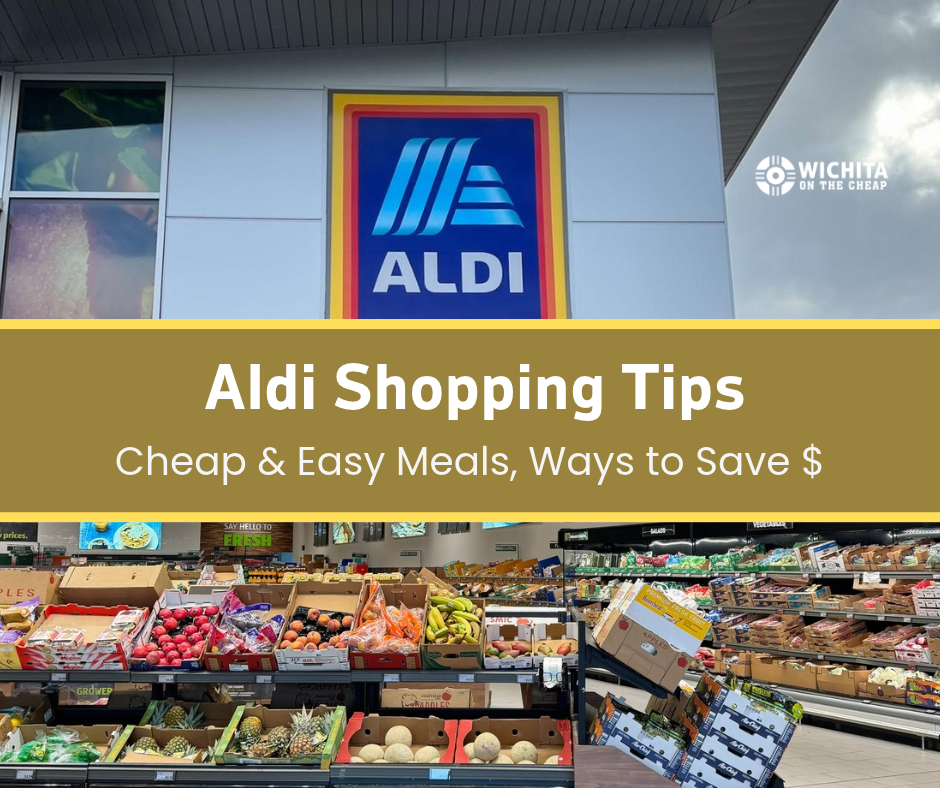
My Favorite Wichita Grocery Store for Saving Money: Aldi
Aldi is where I do a lot of my grocery shopping, and I love it!
It’s one of my favorite places for everyday staples, store brands, produce, and affordable family meals. I also love finding unexpected deals in the Aldi Finds aisle.
I’ve put together a separate guide with my favorite Aldi tricks, including why Wednesday can be a great day to shop, what to know about meat markdowns, and who I follow for new Aldi finds.

Dillions Deals You Might Be Missing!
Are you getting all the savings your Dillons Plus Card offers? I’m sharing my favorite tricks for digital coupons, fuel points, weekly deals, and discounts that can help you spend less on groceries!
How Much Could These Grocery-Saving Habits Save Your Family?
You don’t have to change everything at once.
Here are a few examples of how small savings could add up:
| Grocery Habit | Weekly Savings | Yearly Savings |
|---|---|---|
| Use one pantry-based dinner | $10 | $520 |
| Reduce food waste | $5 | $260 |
| Buy less expensive snacks | $4 | $208 |
| Save on meat purchases | $6 | $312 |
| Potential combined savings | $25 | $1,300 |
These are examples, not guaranteed savings. Your results will depend on what you currently spend, and some of the categories may overlap.
But even saving $10 a week adds up to $520 a year!
Start With One Grocery-Saving Habit This Week
You don’t have to become an extreme couponer, visit four grocery stores, or spend your entire Sunday meal prepping to save money.
Start with one thing.
Maybe you’ll check your freezer before shopping. Maybe you’ll cook extra chicken for tomorrow’s dinner. Or maybe you’ll start looking at the price per ounce instead of grabbing your usual brand.
I know how busy family life can get, and I want these tips to make your life easier, not give you another long to-do list.
My biggest advice is to buy what you’ll actually eat, make the most of what you already have, and keep a few inexpensive dinner ideas ready for those nights when you don’t know what to cook.
And if dinner plans fall apart, you can always check my Wichita Daily Restaurant Specials for ways to save on eating out.
Because saving money doesn’t mean giving up everything you enjoy. It’s about making your money go further so you can live the good life for less!